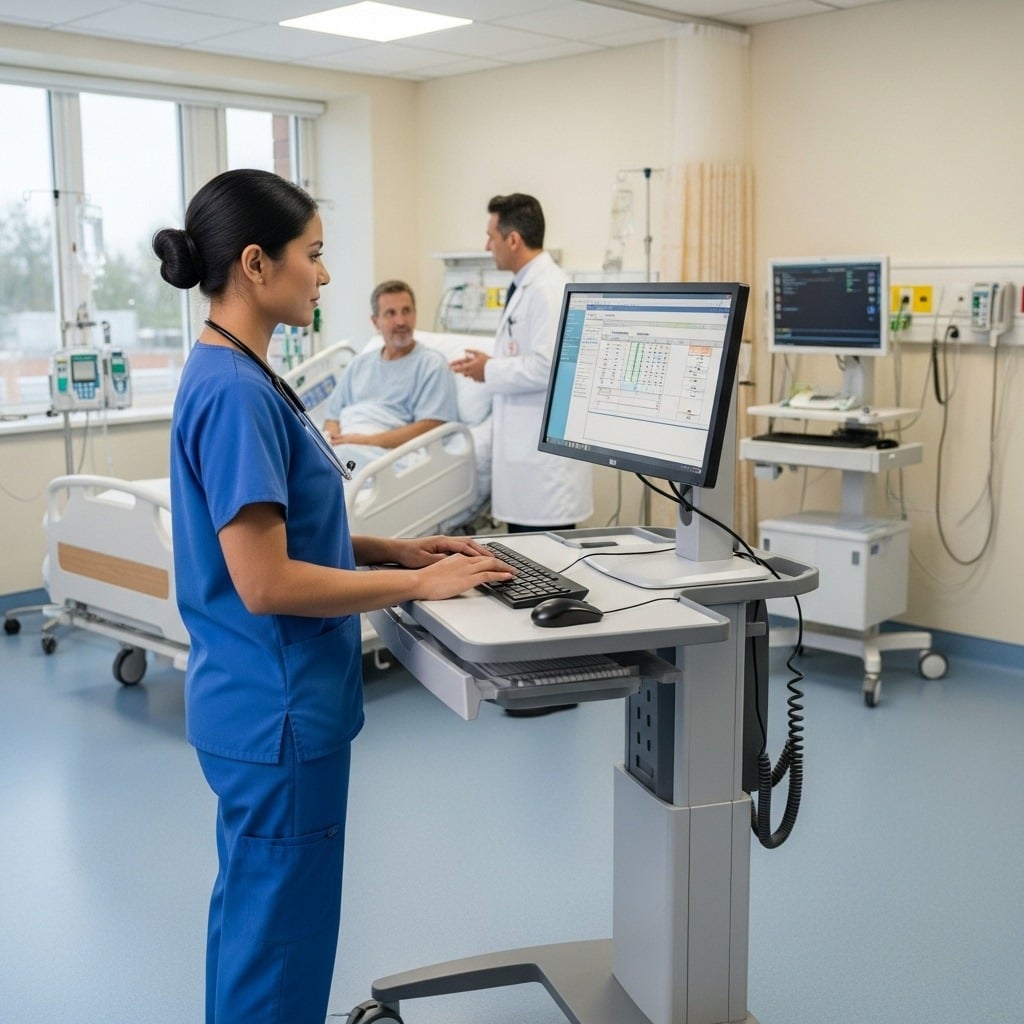
For the modern health system, the mandate to "go passwordless" is no longer a matter of debate. Passwords are, by every measurable metric, a failure: they are the leading vector for credential-based attacks, a constant drain on help-desk resources, and universally loathed by the people forced to remember them. Across industries, the case is clear: passwords are a liability, not a solution.
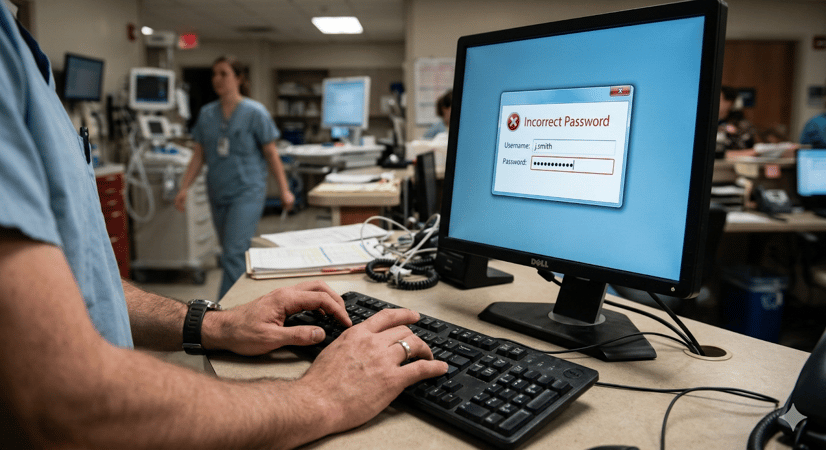
The goal is straightforward: eliminate passwords entirely.
Yet in hospitals, achieving passwordless authentication is anything but straightforward. Unlike corporate offices, hospitals operate as two distinct environments under one roof: the enterprise environment and the clinical environment. The friction between these two worlds is where most passwordless initiatives stall, or, in some cases, die entirely.
This disconnect raises an obvious question: if the motivation to go passwordless is so strong, why is the implementation so broken? Our team has been talking to healthcare leaders, and we found the answer. It lies in a structural reality that many organizations overlook when beginning their passwordless project.
This article will explain why hospital passwordless initiatives keep dying on the vine and what needs to change for hospitals to finally achieve passwordless without compromising clinical workflows or security.
The Enterprise Environment: A Sea of Choices
For administrative staff — HR, finance, compliance, marketing, and executives — passwordless deployment is relatively simple. Devices are assigned to a single user, work is predictable, and IT can manage devices centrally. Within this environment, there is a broad market of mature solutions:
 Platform-Native Tools: Windows Hello, which binds authentication to hardware, making it secure and familiar. Once enrolled, employees can log in with a fingerprint, PIN, or Face ID without typing a password.
- Mobile-Centric MFA: Solutions like Duo or Okta rely on a smartphone push notification to allow users to approve access with a tap or biometric verification.
- Modern Standards (FIDO2/Passkeys): These cryptographic keys replace shared secrets, eliminating passwords entirely and offering strong security for cloud applications.
For non-clinical teams, these solutions work because the user-device relationship is stable: one person, one laptop, and repeated use. Deployment is predictable, scalable, and secure. A single enrollment grants access across devices, and IT support requirements are minimal.
But hospitals do not function in a vacuum. When you step into the clinical environment, the rules change entirely.
The Clinical Environment: Where Passwordless Fails
On the hospital floor, workflows are high-paced, shared, and unpredictable. Nurses, physicians, and technicians rotate constantly between locations, patient rooms, and shared workstations. Standard passwordless solutions, designed for one user per device, quickly collide with the clinical reality. Three core challenges define the problem:
1. The Shared Workstation Nightmare
In most clinical areas, a single workstation may be used by 30 or more clinicians over a single shift. Traditional passwordless tools such as Windows Hello and passkeys rely on local enrollment. Each clinician would need to register on every device they might use — and maintain that enrollment as devices are replaced, updated, or relocated if lost. In a large health system, this could mean hundreds of enrollments across multiple units, creating an ongoing operational burden for IT and clinical staff.
Imagine a nurse running from the ER to a surgical suite, only to be blocked by a login process that requires scanning a fingerprint they’ve never registered on that workstation. In high-acuity environments, this is not just inconvenient; it is unsafe. Repeatedly enrolling credentials across dozens of terminals is simply not realistic.
2. The Mobile Device Problem
Many passwordless flows assume clinicians have immediate access to a mobile phone. The workflow is familiar: enter a username, receive a push notification, and approve with biometrics, such as Face ID or fingerprint. It works in an office, but hospitals are completely different.
- Sterile environments: In operating rooms or isolation units, personal phones are largely prohibited.
- High-acuity care: Clinicians may have gloves, gowns, or other personal protective equipment (PPE) that make phone based biomemtric use impractical.
- Time-critical scenarios: Every second counts; pausing to retrieve, unlock, and approve a push notification is a workflow interruption.
Even in units where phones are allowed, relying on them adds friction that accumulates over the course of a shift. Authentication becomes an obstacle rather than a facilitator, frustrating clinicians and reducing adoption.
3. The Biometric Barrier (PPE and Privacy)
Many hospitals have looked to biometrics, such as facial recognition, iris scanning, or fingerprints, as the “Holy Grail” for passwordless authentication on shared workstations. At first glance, this seems ideal: fast, secure, and hands-free. But as we have already discussed, in practice, it fails to address the realities of clinical workflows:
- PPE interference: Masks, goggles, face shields, and gloves are standard in patient care. They block or distort biometric sensors.
- Privacy and regulatory concerns: Installing high-resolution cameras in patient areas raises ethical, legal, and compliance questions. Hospitals must consider HIPAA requirements and patient consent issues before deploying any continuous video monitoring.
- Environmental variability: Lighting, crowded rooms, and movement all reduce the reliability of biometric sensors.
Taken together, these obstacles — shared workstations, restricted mobile access, and unreliable biometrics — create a patchwork authentication experience. Every switch introduces friction, slows care, and increases cognitive load. Over the course of a shift, these small interruptions add up, frustrating staff and reducing overall adoption of passwordless initiatives.
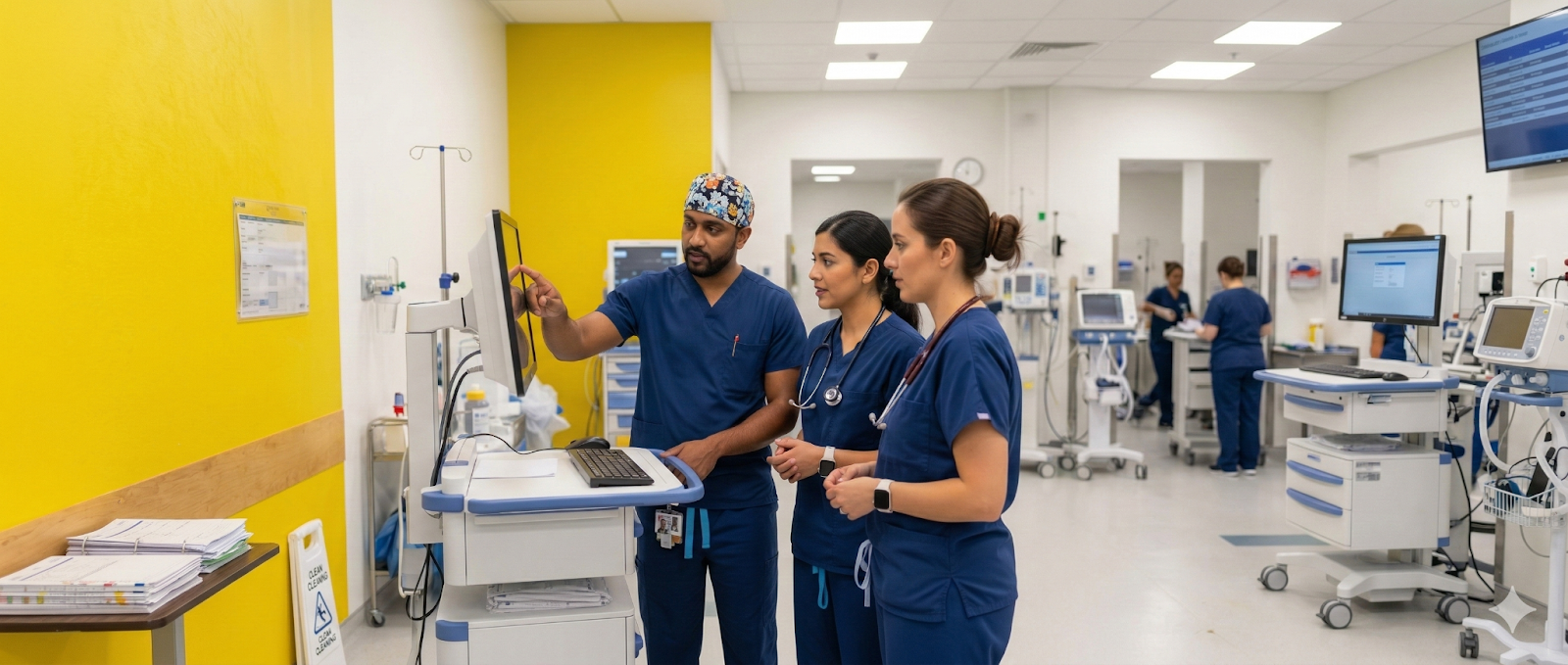
This is where the need for a unified authentication experience becomes clear.
The Unified Experience Requirement
Even when IT teams attempt to deploy different solutions for enterprise and clinical environments, another challenge emerges: experience fragmentation. This creates what many call the "hoop-jumping" problem. A cardiologist might start the morning in the clinic, tapping a badge, then move to a private office for documentation requiring a mobile push notification, and later return to a workstation with yet another method. Every shift between workflows adds cognitive friction, interrupts patient care, and increases frustration.
Different authentication flows in different locations create significant cognitive friction. Clinicians must remember which process applies where, adding mental load to already high-pressure workflows.
Healthcare IT teams increasingly recognize that authentication must feel uniform across environments. A seamless, invisible layer of trust is no longer a convenience; it’s a requirement. Without it, adoption falters, projects lose support, and passwordless 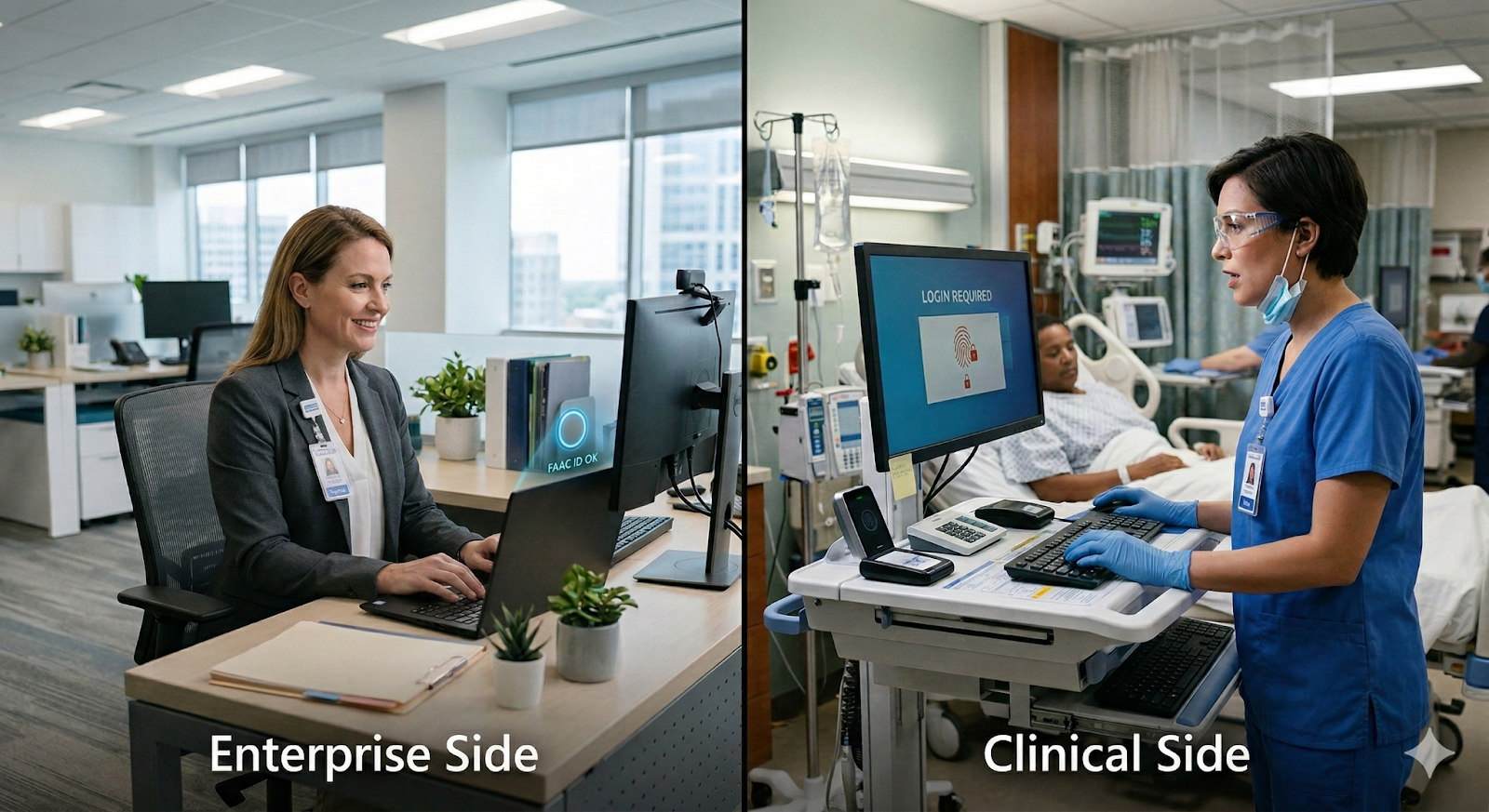 initiatives stall.
Why Projects Stall: The Search for the “Middle Way”
Most hospitals' passwordless projects fail because they attempt to force a single solution onto environments that require different operational models. IT teams face a painful trade-off:
- Cut Corners: Deploy something like badge-only logins or pass-through authentication to simplify authentication, compromising security.
- Status Quo: Stick with long, complex passwords and MFA, accepting lost productivity, frustrated clinicians, and relentless help-desk tickets.
Neither approach resolves the paradox. The enterprise environment requires security, the clinical environment requires speed, and neither can compromise the other. Attempting to meet both needs with a single, one-size-fits-all solution almost always fails.
The Twosense Difference: Bridging the Gap
We recognized that the problem isn't the lack of biometrics, but the way biometrics are being used.
Instead of asking a doctor to stop what they are doing to scan a finger or look into a camera, Twosense uses behavioral biometrics as an active authentication factor. Typing rhythm, keystroke cadence, and mouse movement form a live, session-based biometric signature, something unique to each individual and impossible to share, steal, or replicate.
Key Benefits in Clinical Environments:
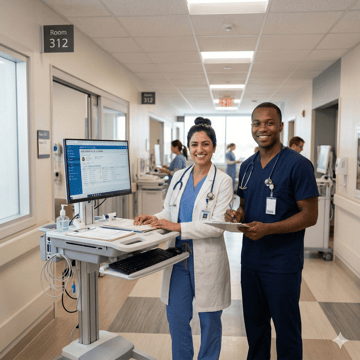
- No Enrollment Per Device: Clinicians are recognized everywhere without registering on each workstation.
Their identity follows them, not the terminal. - Invisible MFA: Phones are unnecessary; authentication occurs seamlessly in the background, and clinicians can stay focused on patient care.
- Works with PPE: Masks, gloves, and other personal protective equipment do not interfere with authentication or disrupt clinical workflows.
- Uniform Experience: Whether logging in at a shared workstation in a clinical environment or opening a laptop in an office on the enterprise side, authentication is consistent and invisible.
By replacing interruption-based authentication with continuous behavioral authentication, Twosense bridges the divide between enterprise security needs and clinical realities.
Real-World Impact: What Hospitals See With Continuous Authentication
Health systems deploying Twosense report significant benefits:
- Reduced Help-desk Volume: Password-related tickets drop dramatically as clinicians no longer struggle with forgotten credentials or device-specific enrollments.
- Improved Clinician Efficiency: Time spent on login procedures is eliminated, enabling faster access to patient records, lab results, and care plans.
- Enhanced Security Posture: Continuous verification detects anomalous activity, preventing credential misuse without introducing friction.
- Better Adoption: Clinicians report satisfaction with seamless workflows and fewer interruptions, reducing resistance to digital transformation initiatives.
In short, hospitals can finally achieve true passwordless access without compromising patient care or regulatory compliance.
Moving Beyond Passwords
Passwordless authentication is not optional; it’s essential for modern healthcare. But hospitals cannot simply adopt enterprise-focused solutions and expect them to work on the clinical floor. True identity transformation requires solutions that adapt to clinical realities, rather than forcing clinicians to adapt to technology.
 By bridging enterprise security and clinical workflows, Twosense allows health systems to:
- Reduce help-desk burden and associated costs
- Improve clinician efficiency and focus on patient care
- Secure sensitive patient data across shared, mobile, and dynamic environments
- Deliver a unified authentication experience that works everywhere
The passwordless paradox doesn’t have to define healthcare identity. With a thoughtful, adaptive approach, hospitals can finally realize the promise of passwordless authentication — eliminating friction, enhancing security, and empowering clinicians to focus on what matters most: patient care.
Twosense has helped solve this exact challenge for leading US health systems, allowing them to bridge the gap between enterprise security and clinical reality. If you're ready to stop the "hoop-jumping" and move toward a truly uniform passwordless experience, our team is ready to show you how.
.jpeg)