

What Zero Trust Got Right
Zero Trust changed how security teams think about access. Instead of assuming that anything inside the network perimeter is safe, a Zero Trust architecture evaluates identity, device posture, application context, and risk before granting access, and keeps evaluating as conditions change. For a health system managing clinical, administrative, and privileged users across dozens of applications, that shift has been a real improvement over implicit trust.
The Question None of Its Signals Answer
It also has a blind spot that's easy to miss because it sits underneath everything else the architecture checks. Device compliance can confirm whether a laptop meets security requirements. Network context can confirm where a connection originated. Risk engines can flag anomalous behavior at the application layer. Identity and access management can confirm which account authenticated. None of those signals answer a more basic question: is the human operating the session still the human who was issued that access in the first place?
A Static Decision Inside a Dynamic Architecture
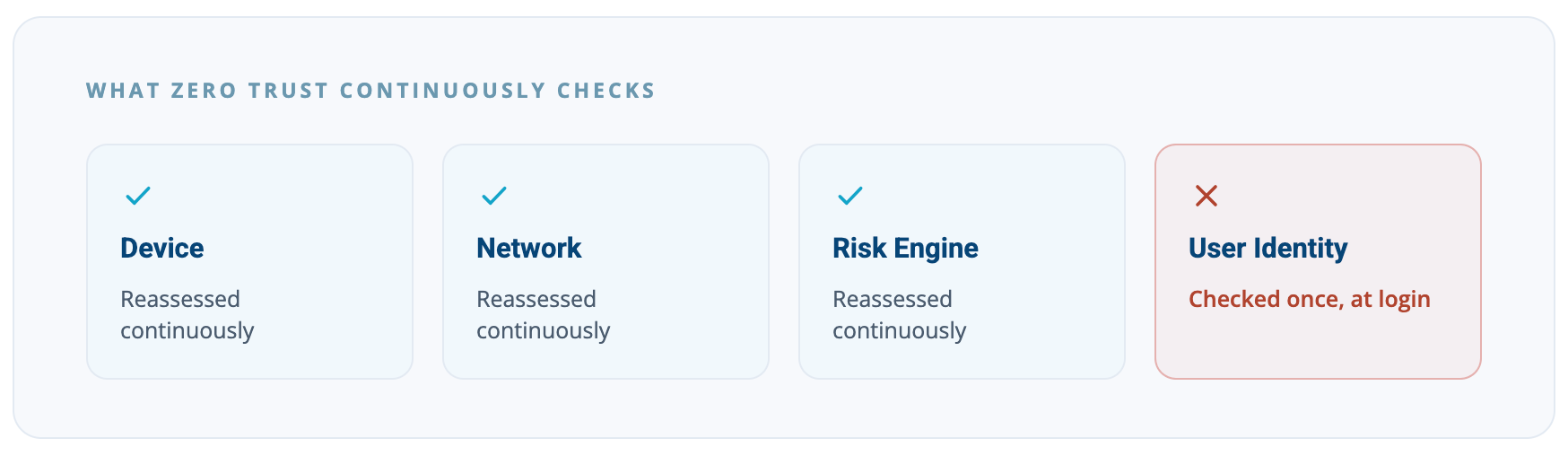
That question tends to get skipped because Zero Trust's continuous evaluation, in practice, is usually continuous evaluation of everything except the person. A device can be reassessed every few minutes. A network connection can be reassessed in real time. The identity behind the session, the actual human at the keyboard, is typically assessed once, at login, and then assumed to hold for as long as the session runs. That's a static decision sitting inside an otherwise dynamic architecture, and it's exactly the kind of gap Zero Trust was built to eliminate everywhere else.
Why Health Systems Can't Ignore This Gap
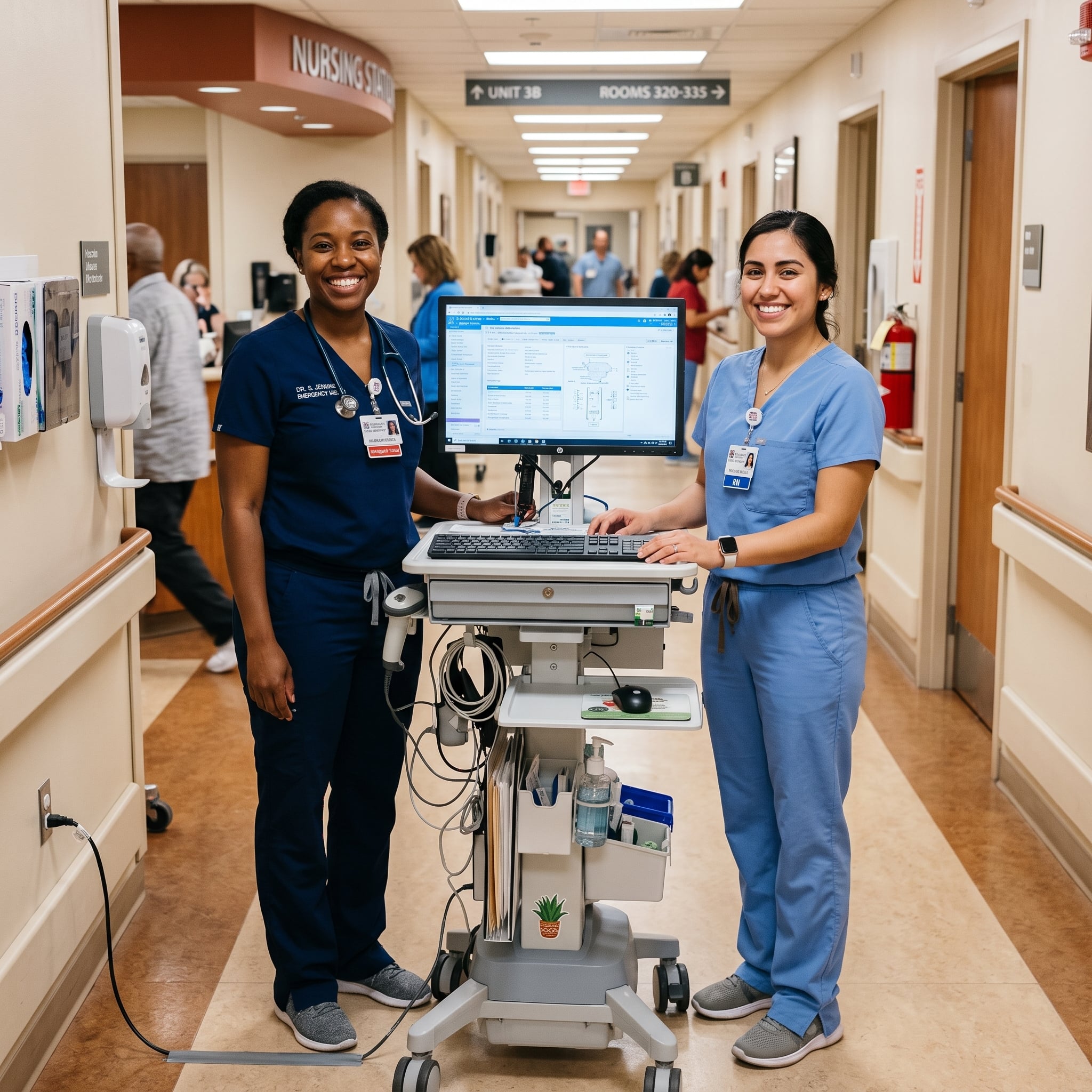
Health systems make this gap harder to ignore than most industries. Shared workstations, clinical interruptions, privileged administrative access, and a workforce that moves constantly between physical locations are normal operating conditions, not edge cases, a pattern this series has already covered in detail. A Zero Trust architecture that continuously checks the device and the network but never rechecks the human is only doing half the job it was designed to do.
Adding the Missing Signal
Adding a continuous human identity signal to that architecture doesn't replace anything already in place. It sits alongside device posture and risk scoring as another input to the same policy engine, so the access decision can account for a change in who's actually there, not just a change in the device or the network they're using.
This is also where the industry's growing conversation about continuous identity actually gets tested. Most continuous identity platforms already do a good job continuously checking devices, networks, and risk signals, the same categories Zero Trust has always covered well. Far fewer of them generate an independent signal for the human being behind the keyboard, which means the gap this piece has been describing sits inside most continuous identity architectures today too, not just inside Zero Trust.
See how Continuous Authentication fills the human identity gap in a Zero Trust architecture: Explore Behavior as a Biometric and Continuous Authentication in Zero Trust Environments