
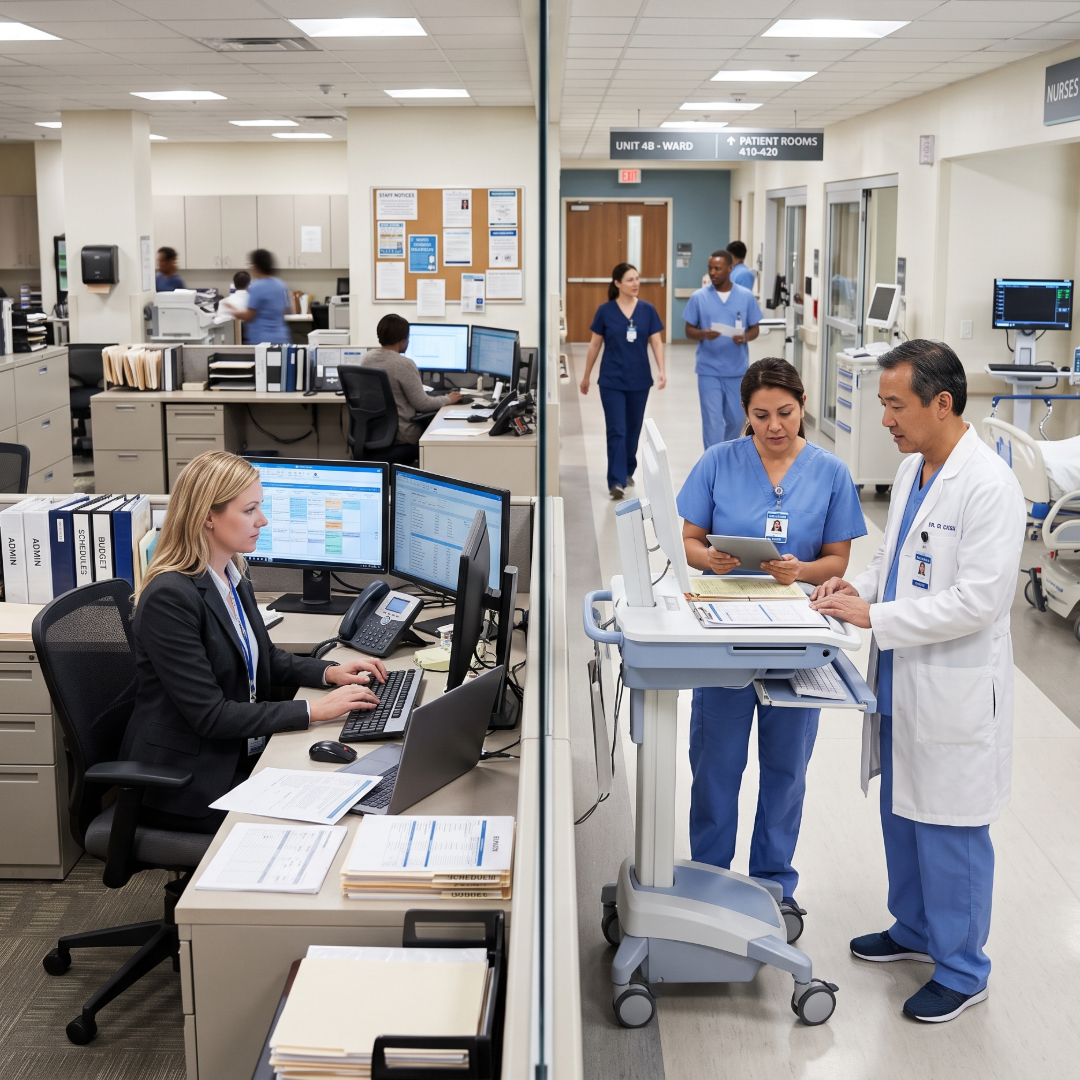

A Conversation That Starts With Clinicians and Stops Too Soon
Mention identity risk in a hospital and the conversation almost always goes straight to clinicians: nurses, physicians, EHR access, shared nursing-station terminals. That's a real and visible part of the problem, and it's where the first several pieces in this series have focused. It's also only part of the workforce that depends on the same kind of authenticated, always-on access.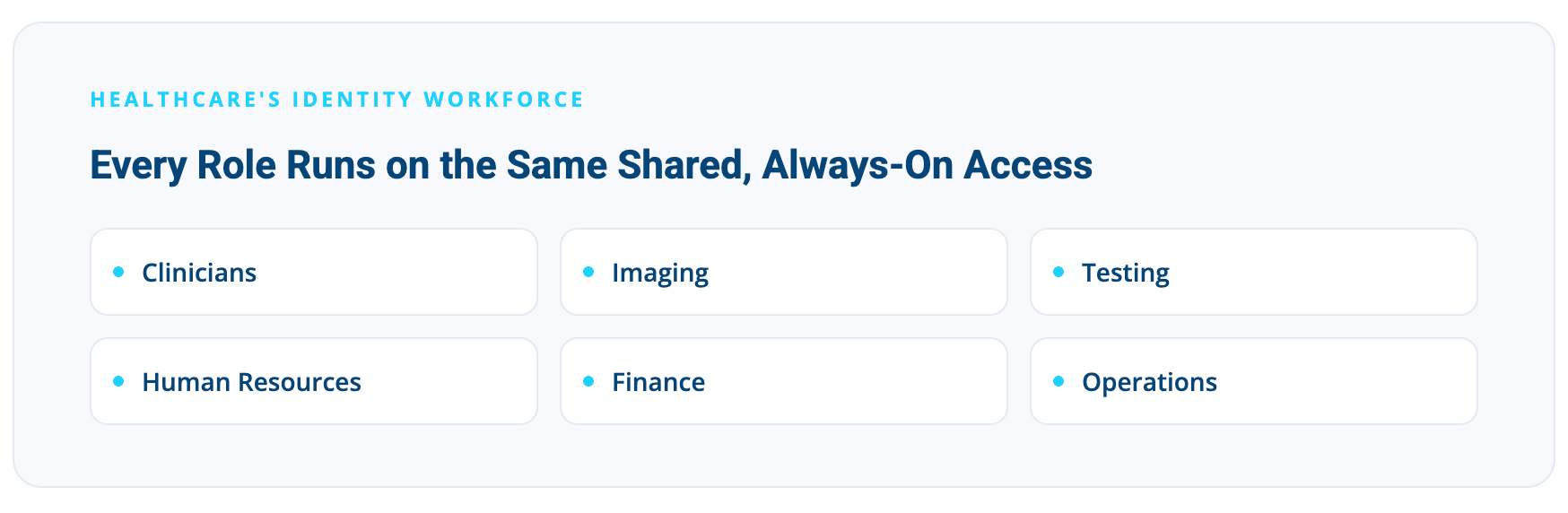
The Rest of the Workforce Running on the Same Access
Registration staff authenticate into scheduling and intake systems and handle demographic and insurance information for every patient who walks through the door. Revenue cycle employees log into billing and claims platforms that hold financial and clinical data side by side. Health information management teams work inside the medical record itself, often with broader access than the clinicians who created the records. IT administrators authenticate into privileged systems that can touch nearly everything else in the environment. Contractors and business associates get access to specific applications for exactly as long as their engagement runs, and often longer.
The Same Mechanics, a Different Badge
None of these roles wear scrubs, and none of them get discussed as often as clinical staff when the subject is session security. But the underlying mechanics are identical to what a nursing-station terminal goes through in an ordinary shift, the kind of handoff already covered in this series. A registration employee authenticates at an intake desk, gets pulled away to help a patient at the counter, and leaves the session active behind them. A revenue cycle employee working a hybrid schedule steps away from a laptop mid-task. An IT administrator opens a privileged session and takes a call in the hallway. The identity provider's logs look the same in every case: one clean, valid, authenticated session, regardless of who's actually in front of it a few minutes later.
Why Narrowing the Scope Is a Mistake
Treating this as a clinical problem, or a shared-workstation problem specifically, misses how wide the actual exposure is. The information at risk in a billing system or a health information management platform is exactly as sensitive as the information in an EHR, sometimes more so, because it includes the financial and demographic data that makes identity theft and insurance fraud possible. A security program that only extends continuous identity assurance to clinical staff has closed the most visible version of the gap and left the rest of the organization exactly where it started.
One Principle, Every Department
The principle that applies to a nurse at a shared workstation applies just as directly to a billing analyst at a desktop: the question worth asking isn't only who authenticated, it's whether the person still at the keyboard is the same one who did.