
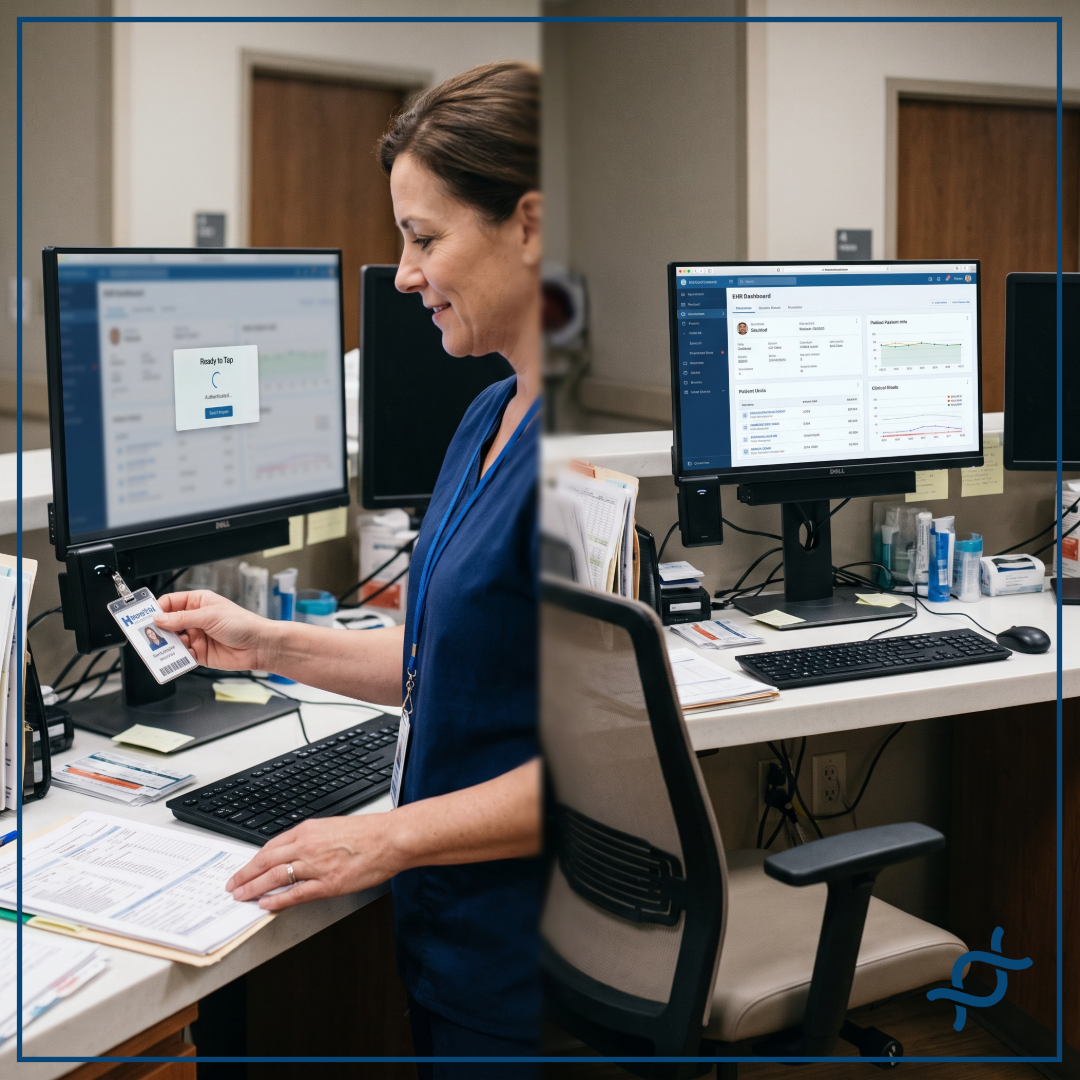

No. Passwordless authentication changes how a user proves identity at login, a badge, a biometric factor, or a mobile push instead of a password, but it doesn't change what happens after that moment. The gap between authentication and the rest of the session exists no matter which method opens it.
The Same Gap, a Different Login Method
Passwordless authentication can remove passwords from the login process, but it does not automatically solve every shared workstation security problem. The same issue can exist regardless of whether the initial authentication uses a password, a mobile authenticator, a badge, a biometric factor, or another passwordless method: if authentication happens once and the system assumes the same person remains behind the keyboard, there is still a gap between the initial authentication event and the remainder of the session.
This is why passwordless authentication and Continuous Authentication should not be treated as interchangeable concepts. Passwordless removes or reduces reliance on passwords. Continuous Authentication addresses what happens after the initial authentication. For hospitals with shared workstations, both can matter, but they solve different halves of the problem.
Why This Distinction Matters in Healthcare
Clinical environments involve PPE, infection control protocols, and time pressure that make some passwordless methods, particularly ones that require touching a phone or presenting a badge, harder to use consistently than they'd be in a typical office. Even where a passwordless method works well at login, it still produces the same open, unattended session risk once a clinician steps away.
A more complete architecture combines passwordless access at the point of login with Continuous Authentication for the rest of the session: the initial authentication establishes identity, and Continuous Authentication keeps evaluating whether the person behind the keyboard still matches it. That combination addresses both sides of the problem, getting the right person into the system and maintaining confidence that the right person remains there.
Frequently Asked Questions
Does passwordless authentication secure shared workstations?
Passwordless authentication can reduce credential-related risk and improve the login experience, but it does not automatically provide continuous verification throughout a session. Hospitals should evaluate what happens after the initial passwordless authentication event, not just the event itself.
Should hospitals move to passwordless access at all?
Passwordless access still has real benefits for login speed and reducing password-related risk. The point isn't to avoid it, it's to pair it with a control that covers what passwordless alone can't: the rest of the session.