

Yes. Continuous Authentication verifies identity once a second, every second a session is active, using passive behavioral signals like typing rhythm and mouse movement, no phones, tokens, or cameras required. It's verification, not identification, and when trust drops, policy acts automatically, without adding a single step for the clinician.
Why Friction Is the Central Challenge
This is one of the central challenges in health system authentication. Security controls that require constant user interaction can create friction in environments where employees already move rapidly between workstations and applications. That's why hospitals increasingly need to evaluate authentication based not only on how securely it verifies identity, but also on how much interaction it requires from the user.
How Background Verification Works
Continuous Authentication operates in the background using signals generated during normal computer activity, and it's software-only: there's nothing to deploy at the workstation itself, no cameras, tokens, or fingerprint readers. User profiles build automatically from normal behavior, so there's no enrollment step and no opt-in. The user does not need to repeatedly enter a password, approve a push notification, present a badge, or interact with a camera simply to maintain an authenticated state.
What This Means in Practice
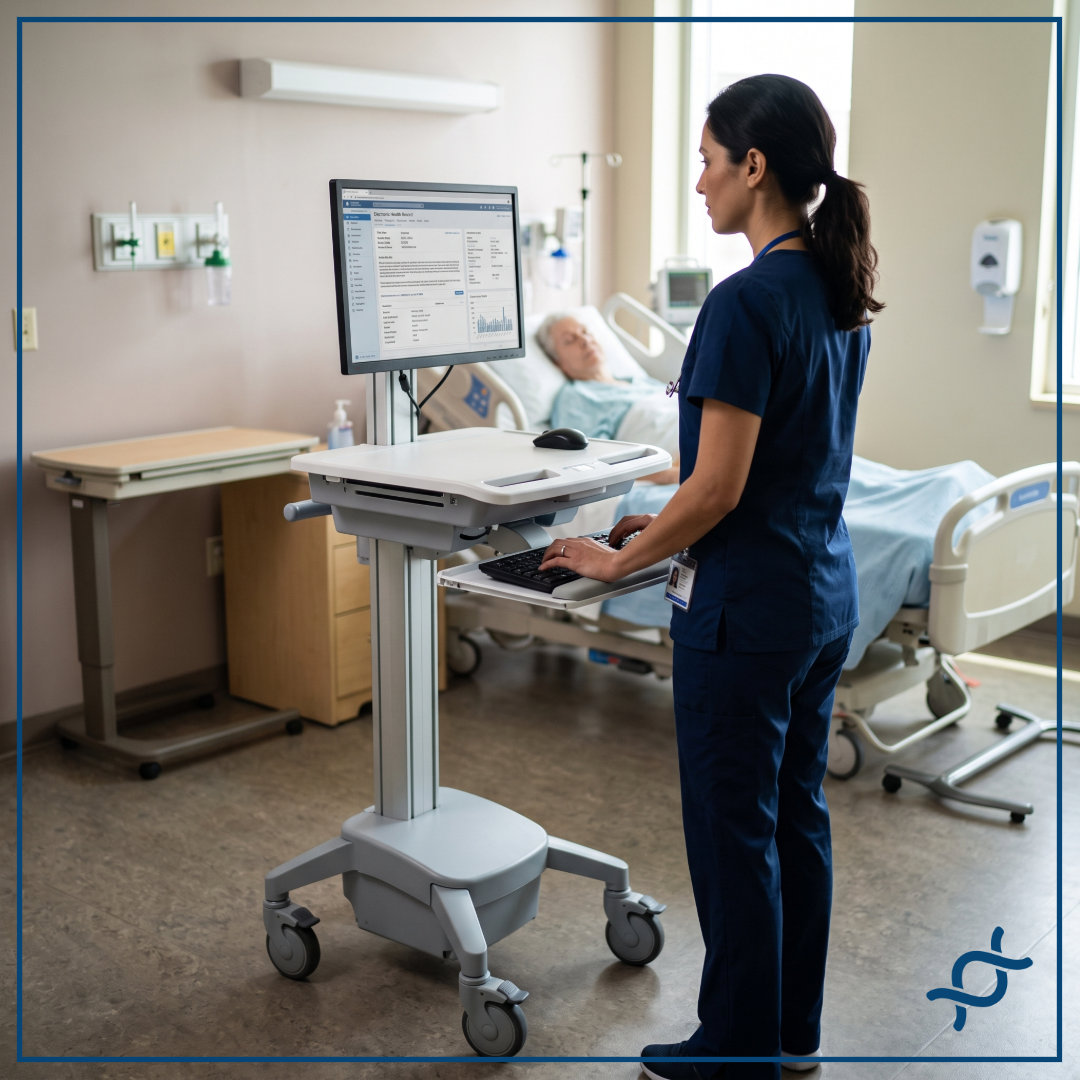
A nurse badges in at the start of a shift and keeps working normally: typing notes, clicking through the EHR, moving between screens. None of that changes. What changes is what happens if someone else sits down at that same open session: the behavioral signal stops matching, and the orchestration engine automatically triggers the hospital's defined policy response, re-authentication, session termination, or step-up authentication, with alerts routed to the SIEM, without ever asking the original clinician to do anything extra along the way.
Works With What's Already There
Continuous Authentication is layered on top of a hospital's existing identity stack rather than replacing it. There's no IAM overhaul necessary: it adds session-length verification to whatever badge system, SSO, or MFA a hospital already has in place, and identity signals are shared with connected systems in real time through the Continuous Access Evaluation Profile (CAEP) so access decisions stay current as trust changes.
Frequently Asked Questions
Can Continuous Authentication work without phones, badges, or cameras?
Continuous Authentication itself doesn't need any of that. It's software-only, using signals generated naturally during computer interaction, such as typing rhythm and mouse movement, so there's nothing to install at the workstation and no additional device for the clinician to carry. It runs alongside whatever a hospital already uses for the initial login, a badge tap, SSO, or MFA, without adding a phone, camera, or fingerprint reader for the verification that follows.
Does removing friction mean giving up security?
No. The friction reduction comes from where the signal is captured, ordinary computer use, not from lowering the bar for what counts as a security event. A behavioral mismatch still triggers the hospital's defined policy response.